




Jesuit Heritage
Jesuits and Education
A Tradition of Excellence, Service, and the Greater Good
Who Is a Jesuit?
From St. Ignatius of Loyola to a global mission of learning, service, and faith.

St Ignatius of Loyola, founder of the Society of Jesus
A Jesuit is a member of the Society of Jesus (S.J.), a Roman Catholic religious order of men founded by St Ignatius of Loyola. Among the Society's seven founding companions was St Francis Xavier, the heavenly patron of St Xavier's College, Thumba, whose missionary zeal and spirit of service continue to inspire the College's vision and mission. Renowned for its commitment to education, missionary endeavour, and service to humanity, the Society of Jesus was long regarded as the principal force behind the Counter-Reformation and later emerged as a leading influence in the modernisation of the Catholic Church.
The Society traces its origins to the spiritual journey of Ignatius, a Spanish soldier whose religious conversion followed a prolonged recovery from a battle wound. During this period, he composed the Spiritual Exercises, a spiritual guide that invites individuals to grow in freedom, discernment, and a deeper following of Jesus Christ. On 15 August 1534, in Paris, Ignatius and six companions, united by a shared vision, took vows of poverty, chastity, and a pilgrimage to Jerusalem. When that final commitment proved impossible, they pledged instead to place themselves at the service of the Pope, accepting whatever apostolic mission they might be entrusted with. In 1539, Ignatius drafted the first constitution of the new order, which Pope Paul III formally approved on 27 September 1540.
The Jesuits' prominence among religious orders and their steadfast loyalty to the Pope soon attracted fierce opposition. By the mid-eighteenth century, a broad coalition of political and ecclesiastical adversaries sought the Society's suppression, driven largely by the anti-clerical and anti-papal currents of the age. Under sustained pressure from the governments of France, Spain, and Portugal, Pope Clement XIV suppressed the Society in 1773. Yet it survived in Russia, where Catherine II the Great refused to enforce the papal decree. As the demand for Jesuit education and missionary work continued to grow, Pope Pius VII restored the Society in 1814.
Today, the Society of Jesus is the largest religious order of men in the Catholic Church. While education remains its principal apostolate, Jesuits also serve in missions, social justice initiatives, communications, ecological stewardship, interreligious dialogue, and public life across the world. In 2013, Pope Francis became the first Jesuit to be elected Pope, a milestone that reflected the Society's enduring commitment to faith, justice, and service.
The Jesuit Educational Tradition
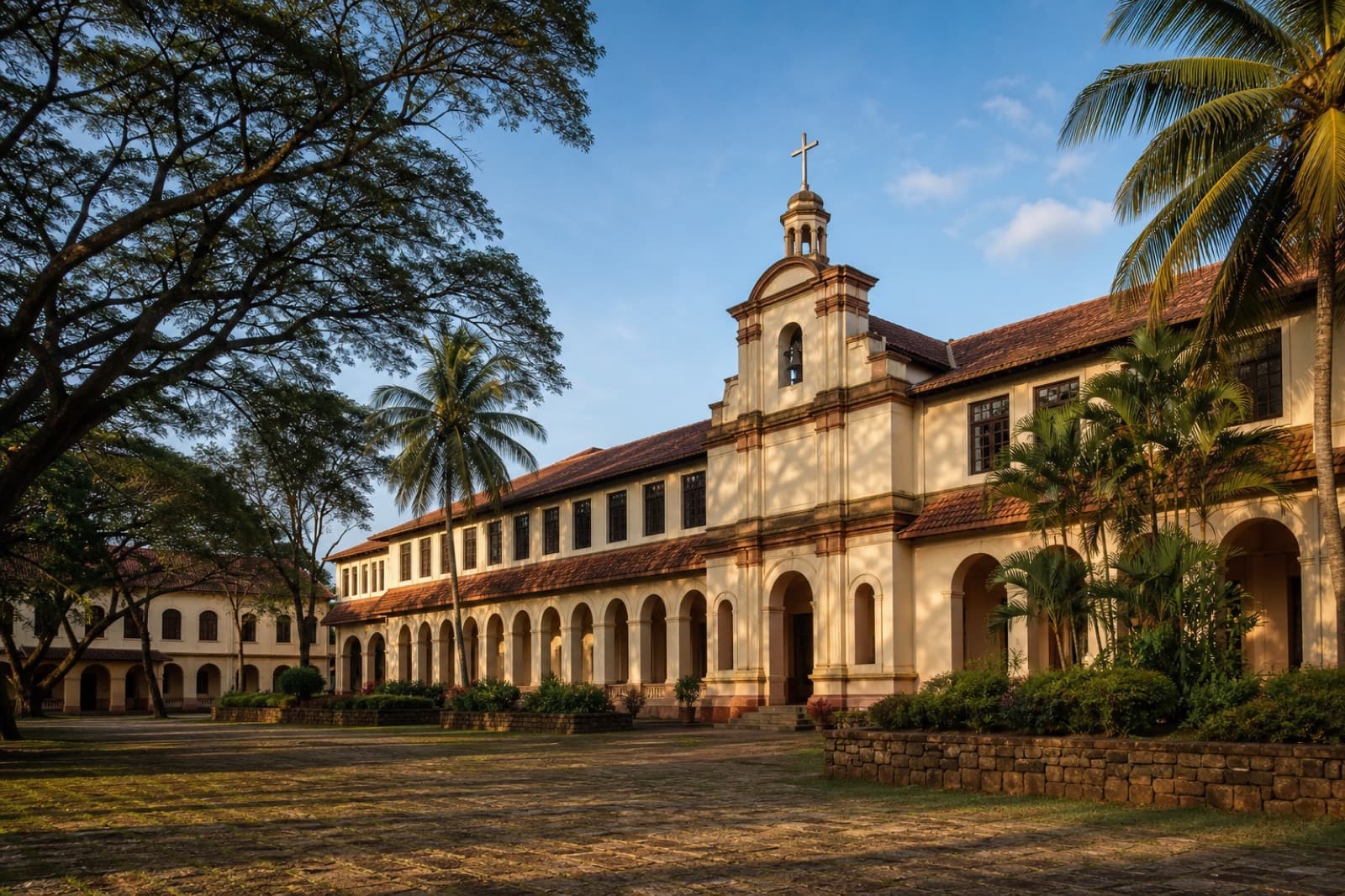
St. Xavier's College, Thumba, belongs to the worldwide network of Jesuit educational institutions inspired by the vision of the Society of Jesus, founded by St. Ignatius of Loyola.
For more than four centuries, Jesuit institutions across the world have been recognized for their commitment to intellectual excellence, ethical leadership, social responsibility, and holistic human development. Today, Jesuit education serves millions of students through schools, colleges, and universities across continents.
The Society of Jesus currently has more than 200 higher-education institutions across more than 50 countries, coordinated internationally through the International Association of Jesuit Universities (IAJU).
Prominent International Jesuit Higher Educational Institutions
Georgetown University
USA
Boston College
USA
Fordham University
USA
Santa Clara University
USA
Ateneo de Manila University
Philippines
Sophia University
Japan
Universidad Pontificia Comillas
Spain
University of Deusto
Spain
University of the Sacred Heart (Universidad Católica de Córdoba)
Argentina
Ateneo de Manila University / Xavier University Network
Philippines
Prominent Jesuit Higher Educational Institutions in India
Loyola College
Chennai
St. Xavier's College
Mumbai
St. Xavier's College
Kolkata
St. Joseph's University
Bengaluru
St. Joseph's College
Tiruchirappalli
St. Aloysius (Deemed to be University)
Mangaluru
Xavier University
Bhubaneswar
St. Xavier's University
Kolkata
Andhra Loyola College
Vijayawada
St. Xavier's College
Ahmedabad
XLRI – Xavier School of Management
Jamshedpur
Xavier Institute of Management (XIMB)
Bhubaneswar
The Principle of Magis
At the heart of Jesuit education lies the concept of Magis, a Latin term meaning "the more" or "the greater good." It encourages individuals to continually strive for excellence, seek deeper understanding, and use their talents in service of others.
Magis is not merely about achievement; it is about becoming the best version of oneself while contributing meaningfully to society.
Educating the Whole Person
Jesuit education seeks the formation of the whole person by integrating:
Intellectual Formation
Promoting academic excellence, critical thinking, creativity, and lifelong learning.
Ethical Formation
Cultivating integrity, responsibility, and moral leadership.
Spiritual Formation
Encouraging reflection, self-awareness, and a deeper sense of purpose.
Social Formation
Developing commitment to justice, equality, compassion, and service.
Faith That Does Justice
A distinctive feature of Jesuit education is its commitment to building a just and humane society. Students are encouraged to understand social realities, respond to human needs, and work towards creating a world rooted in dignity, inclusion, and peace.
This tradition continues to guide the mission and educational philosophy of St. Xavier's College, Thumba.
Discover Our Story
Learn more about the college's history, mission, and commitment to Jesuit values.