
Four laboratories under one roof
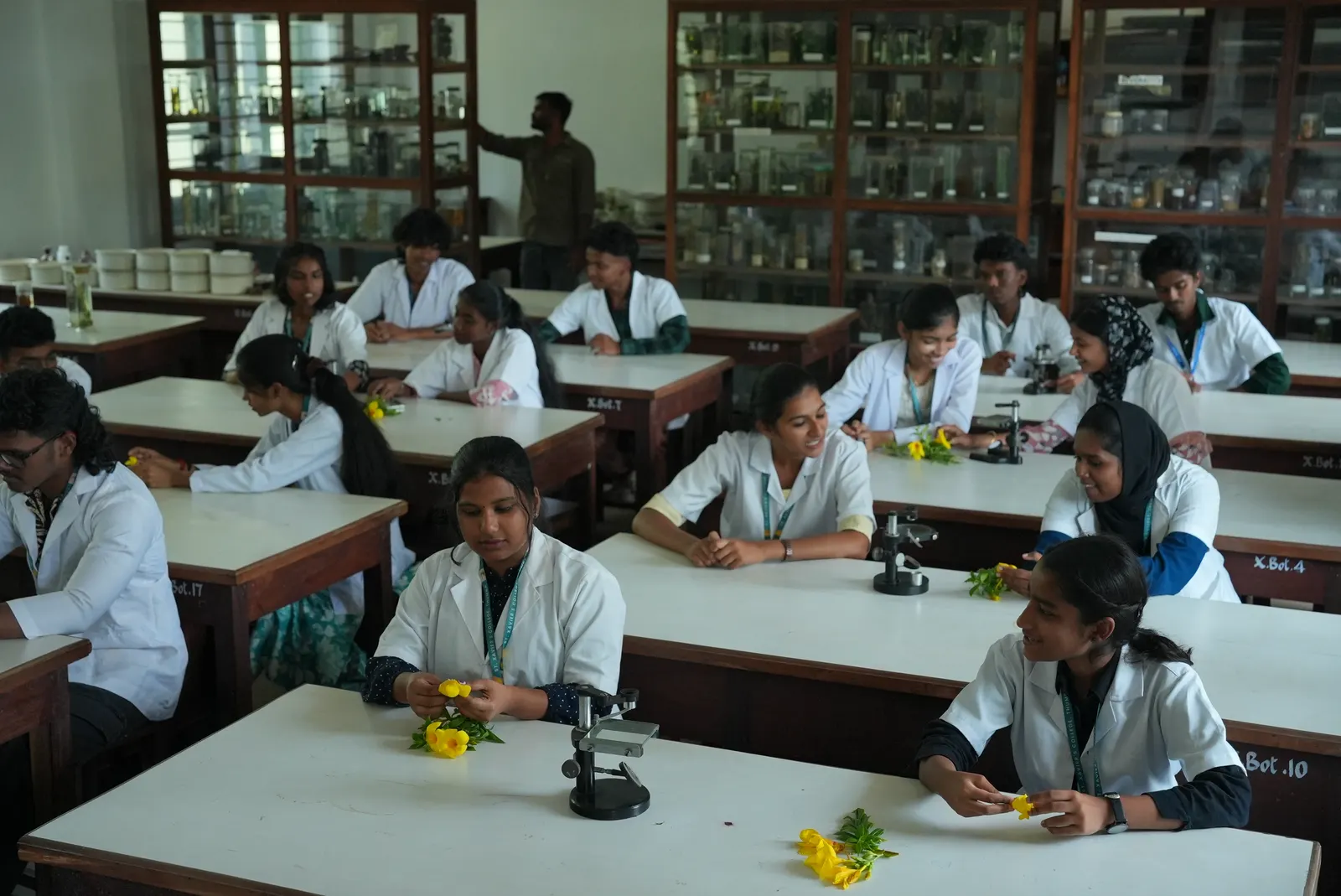
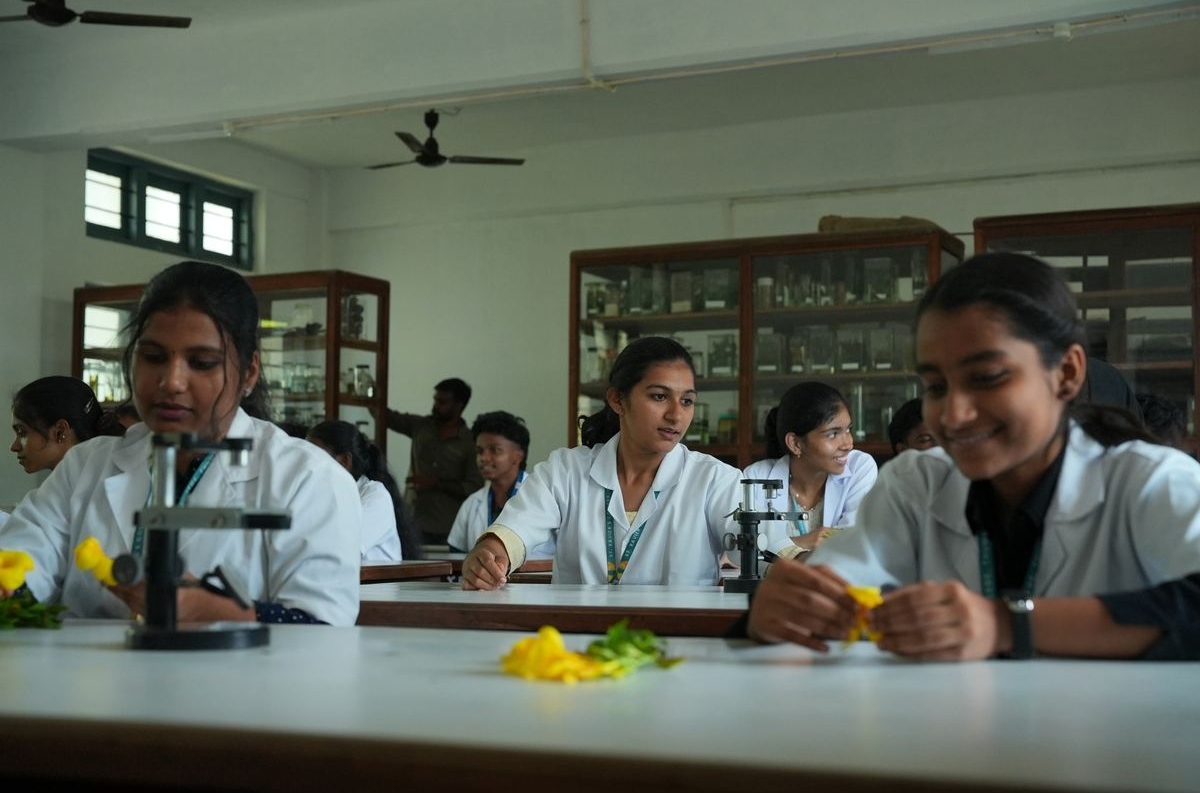
Dedicated Botany, Biotechnology, Plant Tissue Culture and Microbiology laboratories support continuous hands-on training.

ST. XAVIER'S COLLEGE
THUMBA, THIRUVANANTHAPURAM
ST. XAVIER'S COLLEGE
THUMBA, THIRUVANANTHAPURAM

Veli - Perumathura Road, Thumba, Thiruvananthapuram - 695586, Kerala, India
Affiliated to the University of Kerala | Approved under section 2(f) and 12(B) of UGC Act, 1956.
A Christian Minority Jesuit Institution. NAAC Accredited with 'A' Grade (CGPA 3.22) in the 3rd Cycle
B.Sc. Botany and Biotechnology (Honours)
Department sections
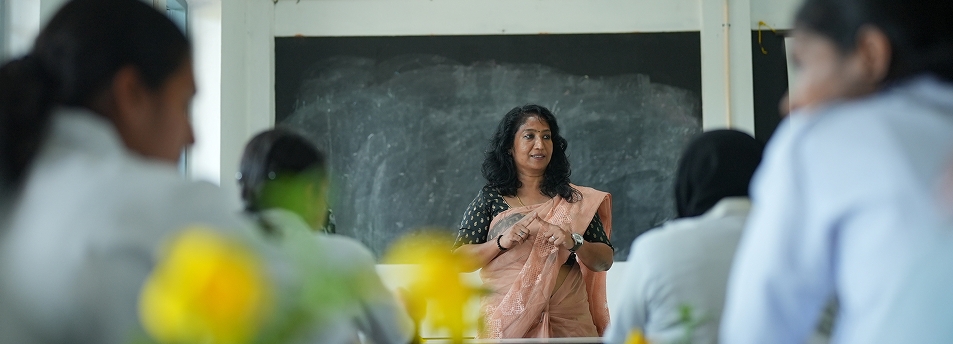
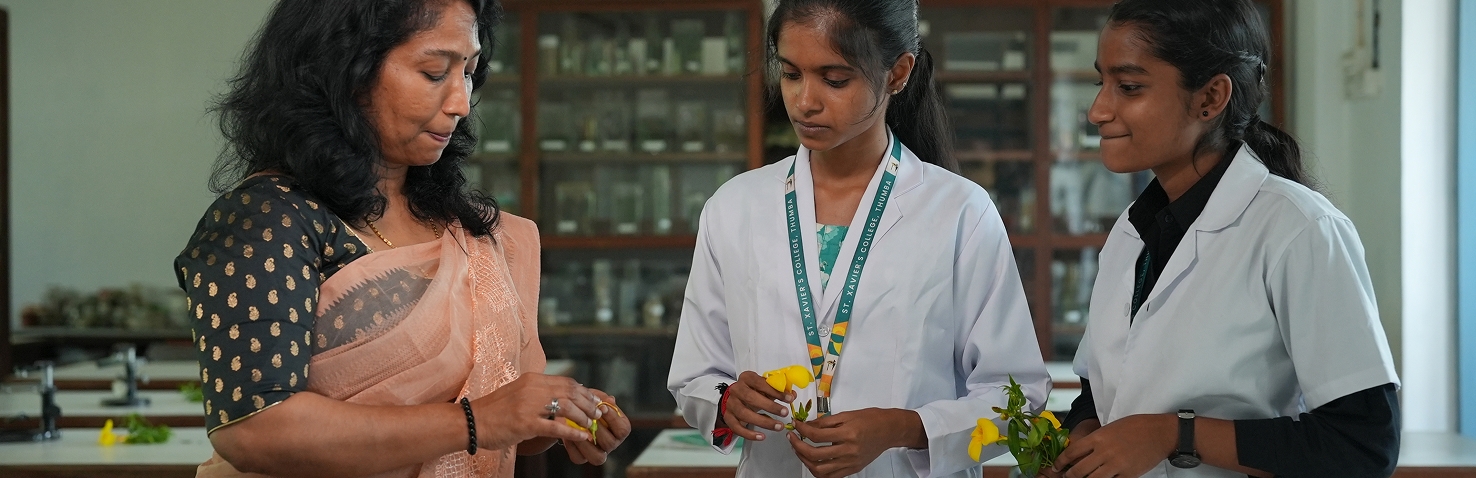
In an era defined by climate change, biodiversity loss, food insecurity, and the rapid growth of biotechnology industries, the Department of Botany and Biotechnology offers an education that is both timely and transformative. Established as an independent department in 2000 under the leadership of its inaugural Head, Dr. Cyril, the department bridges classical plant science with cutting-edge disciplines: molecular biology, bioinformatics, plant tissue culture, and environmental biotechnology, preparing graduates to engage with the most pressing challenges of our time.
Four dedicated laboratories, a botanical garden, a greenhouse, and active faculty research in phytopharmacology, ethnobotany, and industrial biotechnology ensure that learning remains grounded in real scientific practice. Students participate in this work through supervised research projects, field taxonomy drives, and coastal ecosystem surveys; gaining not only technical skills but the scientific temperament needed to address real-world problems.
Within St. Xavier's College, the department functions as a hub for interdisciplinary life science inquiry, bridging laboratory science with environmental and community engagement. A structured mentor-mentee framework, active from admission through graduation, ensures that every student receives the academic guidance and research orientation needed to pursue higher studies, enter emerging biotechnology and environmental sectors, or contribute meaningfully to scientific and social progress. The department's graduates leave not only as trained scientists, but as informed, ethically grounded citizens equipped for the demands of a rapidly changing world.
To develop into a recognised centre of excellence in interdisciplinary life sciences, where plant science and biotechnology advance together in the service of biodiversity, health, and sustainable livelihoods.
The department educates scientifically competent and ethically grounded graduates through rigorous instruction, advanced laboratory training, field investigation, and original research, in keeping with the Jesuit ideal of Magis and a commitment to environmental stewardship.
Dedicated Botany, Biotechnology, Plant Tissue Culture and Microbiology laboratories support continuous hands-on training.
A botanical garden, greenhouse and zoological museum keep taxonomy, propagation and comparative study close to daily teaching.
Faculty work in phytopharmacology, ethnobotany and industrial biotechnology informs supervised student projects and theses.
Taxonomy drives and coastal ecosystem surveys build scientific temperament beyond the classroom and bench.
Every student receives faculty guidance from admission through graduation for academics, research and career planning.

Life sciences are learned as much at the bench and in the field as in the lecture hall. Since becoming an independent department in 2000, we have built our teaching around that conviction: four laboratories under one roof, a botanical garden and greenhouse a few steps away, and faculty who keep research close to undergraduate teaching. Students here handle tissue culture protocols, isolate microorganisms, document plant diversity along our coast, and carry a research question through to a written thesis — each guided by a faculty mentor from admission to graduation. If you are drawn to plants, to molecules, or to the questions of biodiversity, food security, and environmental health that connect them, you will find both the facilities and the guidance you need here. I look forward to welcoming you.
An NEP-aligned undergraduate curriculum providing a solid grounding in plant sciences and modern biotechnology, with an emphasis on interdisciplinary coursework, practical laboratory skills, and scientific inquiry.
A strong foundation in classical plant sciences combined with advanced biotechnology, equipping graduates with knowledge spanning ecological systems to molecular applications.
Dedicated Plant Tissue Culture, Biotechnology, and Microbiology laboratories within a single undergraduate setup, offering hands-on technical training rarely available at the degree level.
Theory integrated with living laboratories: a campus Botanical Garden, Greenhouse, and Zoological Museum, alongside regular field surveys and site visits.
Equipped for anatomical, morphological, physiological, and taxonomic studies.
Furnished for molecular protocols, biochemical assays, and analytical experiments.
A sterile, climate-controlled facility for in vitro propagation, media preparation, and plant cell culture experiments.
Set up for aseptic handling, culturing, and analysis of microorganisms.
A living plant collection serving as a practical resource for taxonomy, morphology, and conservation studies.
Supports plant propagation, acclimatisation of tissue-cultured plantlets, and experimental growth observations.
Holds specialised textbooks, reference manuals, and academic journals in botany, biotechnology, and related life sciences.
Houses biological specimens for comparative study.
Associate Professor & Head of the Department
View profile

Assistant Professor & Research Guide in Biotechnology
View profile

Associate Professor in Biochemistry
View profile

Assistant Professor in Botany
View profile

Assistant Professor in Biotechnology
View profile
Semester-wise syllabi for Botany and Biotechnology papers under the FYUGP framework, affiliated with the University of Kerala.
Course Structure — Biotechnology (FYUGP 2026)
The department prepares students for postgraduate education, doctoral research, competitive examinations, and careers in emerging sectors of life sciences.
Biotechnologist
Botanist
Plant Taxonomist
Research Scientist
Clinical Research Associate
Environmental Consultant
Microbiology Laboratory Professional
Biotechnology Industry Professional
Food Industry Professional
Pharmaceutical Industry Professional
Quality Control Analyst
Agricultural Biotechnology Professional
Higher Education and Research
Teaching and Academia
Apply now to join the Department of Botany and Biotechnology at St. Xavier's College, Thumba.