
Proximity to national space research
The department stands close to the Vikram Sarabhai Space Centre, linking classroom theory directly to active space and atmospheric research.

ST. XAVIER'S COLLEGE
THUMBA, THIRUVANANTHAPURAM
ST. XAVIER'S COLLEGE
THUMBA, THIRUVANANTHAPURAM

Veli - Perumathura Road, Thumba, Thiruvananthapuram - 695586, Kerala, India
Affiliated to the University of Kerala | Approved under section 2(f) and 12(B) of UGC Act, 1956.
A Christian Minority Jesuit Institution. NAAC Accredited with 'A' Grade (CGPA 3.22) in the 3rd Cycle
B.Sc. and M.Sc. in Physics
Department sections
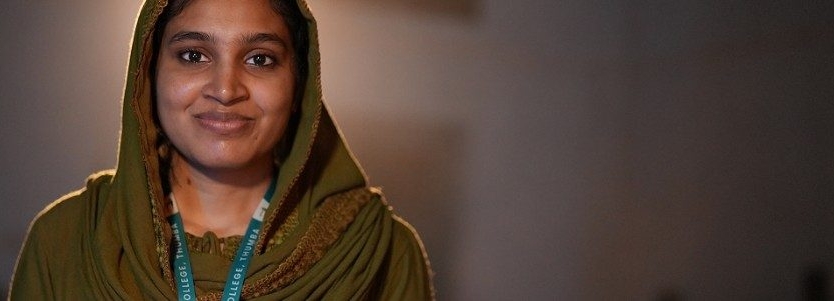
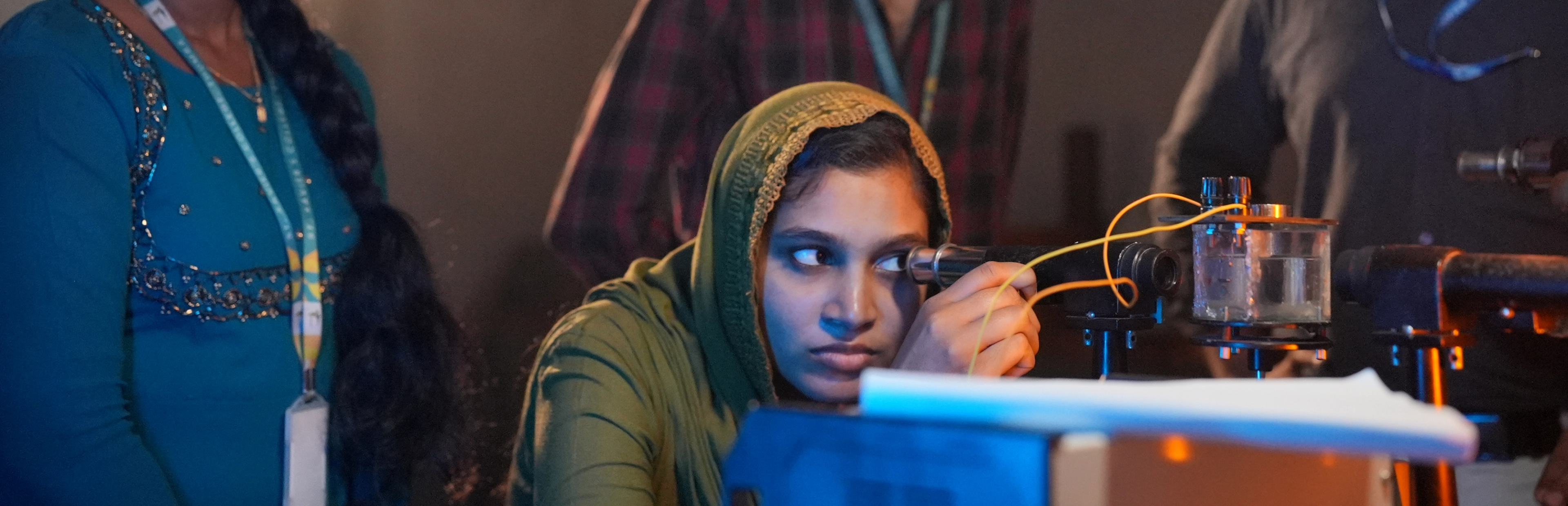
The Department of Physics was established in 1982 under its first Head, Prof. George Varghese, and functioned as an undergraduate centre for its first twenty-three years. Sustained academic performance led to its upgradation as a Postgraduate Department in 2005 with the introduction of the M.Sc. Physics programme. The department today admits 32 students to its undergraduate programme and 10 to its postgraduate programme. Its location in Thumba, in close proximity to the Vikram Sarabhai Space Centre, has shaped a distinctive research culture centred on Material Sciences, Atmospheric Physics, Astrophysics, and Space Science. The department’s faculty comprises exclusively doctorate holders who actively publish in national and international journals and have successfully completed UGC-sponsored research projects, with students having secured the first and fourth ranks at the University of Kerala. Through the annual conference series PADARTHA, an active Astronomy Club, and well-equipped laboratories, the department ensures that theoretical learning remains closely integrated with observational and experimental practice.
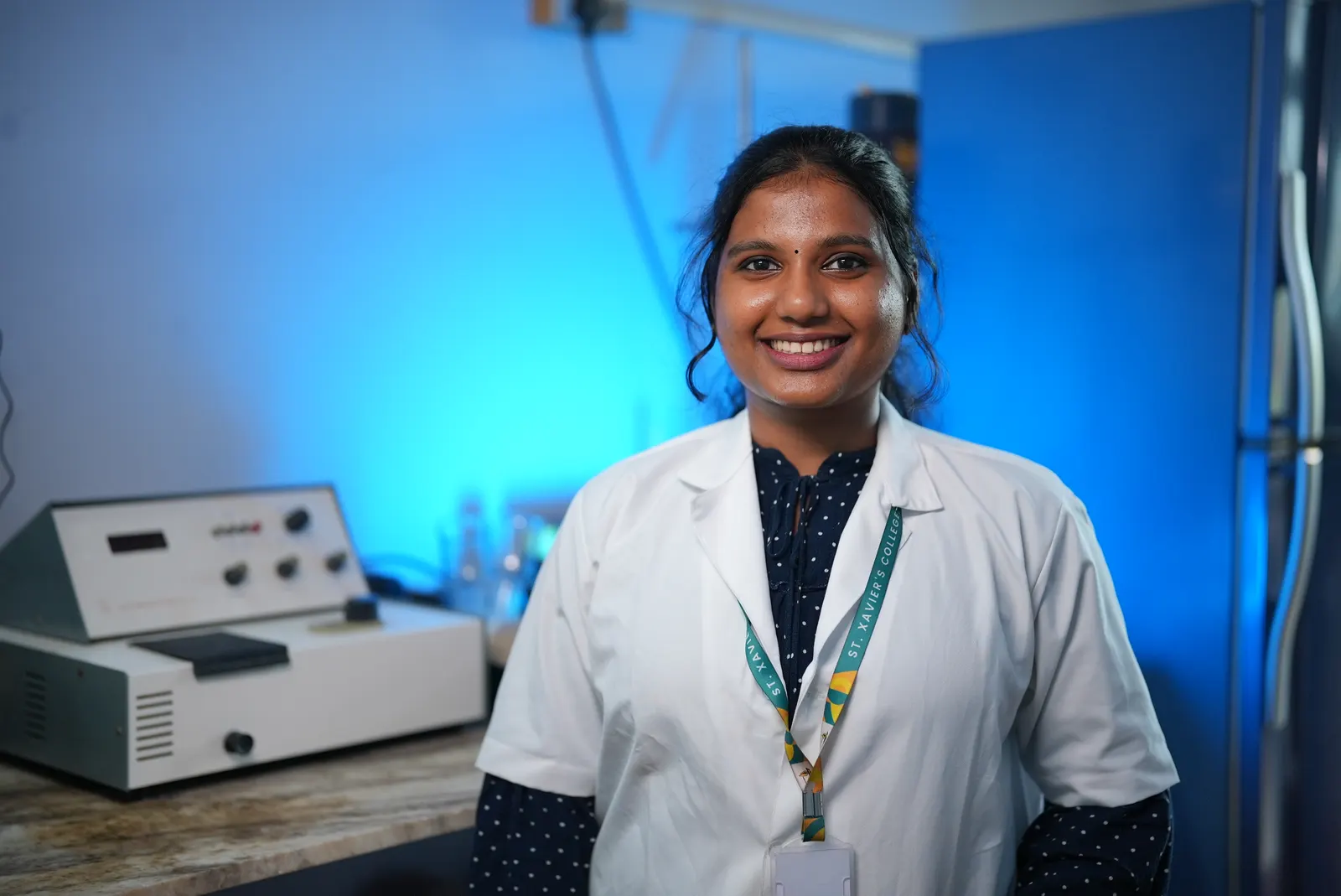
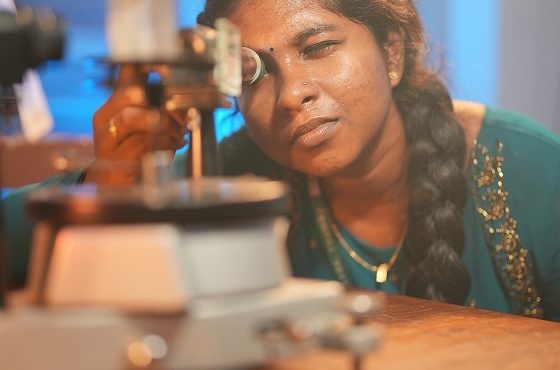
To be recognised as a leading regional centre for the physical sciences, where teaching, observation, and research advance in close association with India’s space research establishment.
The Department of Physics cultivates analytical rigour and scientific inquiry through rigorous coursework, experimental training, and mentored research — guided by the Jesuit ideal of Magis and a commitment to intellectual honesty.
The department stands close to the Vikram Sarabhai Space Centre, linking classroom theory directly to active space and atmospheric research.
Every permanent faculty member holds a Ph.D., with publications in national and international journals and completed UGC-sponsored research projects.
A dedicated research laboratory with nanoparticle synthesis facilities supports advanced work alongside well-established undergraduate and postgraduate laboratories.
A high-power telescope and an active Astronomy Club sustain regular sky-watching sessions for students, local schools and visitors.
Held annually since 2016, PADARTHA introduces students to current research and gives them a platform for formal paper presentations.

Physics is the language in which the universe describes itself, and learning it takes both imagination and patience. We are fortunate in where we teach it. The Vikram Sarabhai Space Centre stands a short distance from this campus, and the birthplace of India’s space programme shapes how our students think about atmospheric physics, astrophysics and space science.
Since 1982 this department has grown from a small undergraduate centre into a postgraduate department with a research laboratory of its own, including nanoparticle synthesis facilities and a high-power telescope that our Astronomy Club opens to the wider public. Every permanent faculty member holds a doctorate and remains in active research, and our students have taken first and fourth ranks in the University of Kerala. Our annual conference PADARTHA gives them a platform to present their own work. Come and look closely at the world with us.
A foundational four-year undergraduate programme framework affiliated with the University of Kerala that builds a robust foundation in core physical principles while making abstract concepts intuitive through structural laboratory experiments and hands-on demonstrations.
A rigorous postgraduate programme that transitions students from learners to active contributors to the scientific community by offering deeper specialization, advanced experimental lab practicals, and independent research.
We place a strong emphasis on research backed teaching methods, encouraging students to think beyond the textbook in core physics domains.
Our immediate geographical proximity to the Vikram Sarabhai Space Centre (VSSC) bridges the gap between academic theory and real-world space and atmospheric sciences.
The department features an active Astronomy Club that regularly organizes sky-watching sessions for students and astronomy enthusiasts.
Through our annual conference series ‘PADARTHA’ established in 2016, students get direct exposure to contemporary research trends and peer collaborations.
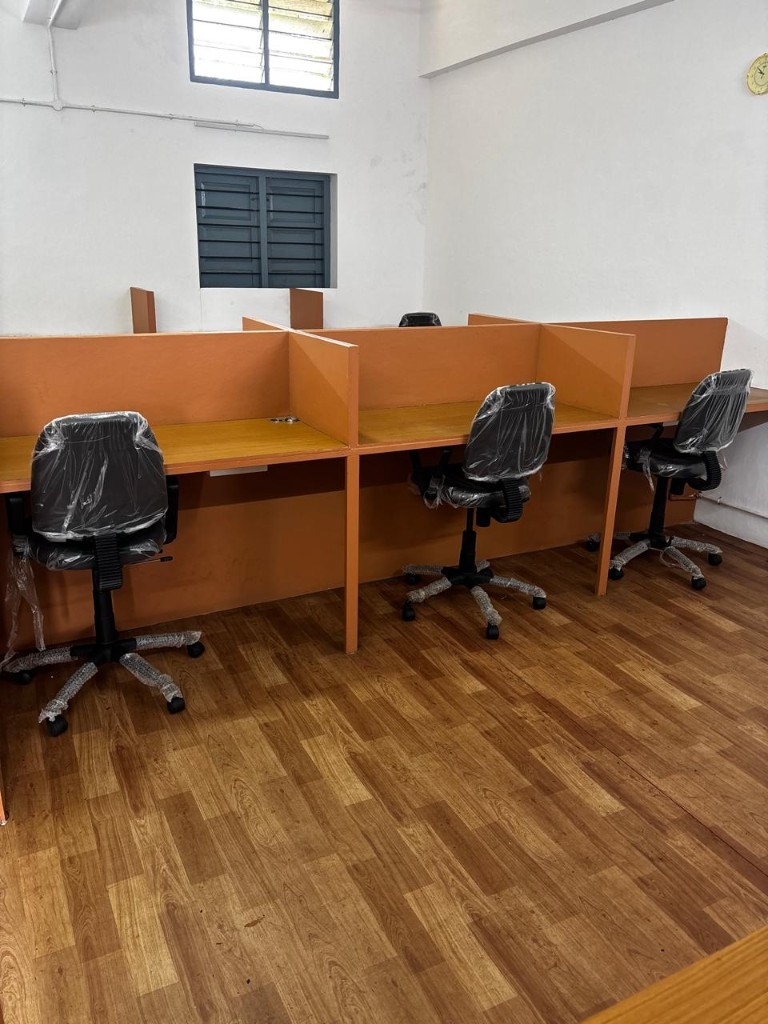
Our department features fully equipped smart classrooms and a conference room fitted with projectors and digital smart boards to deliver interactive visual lectures.
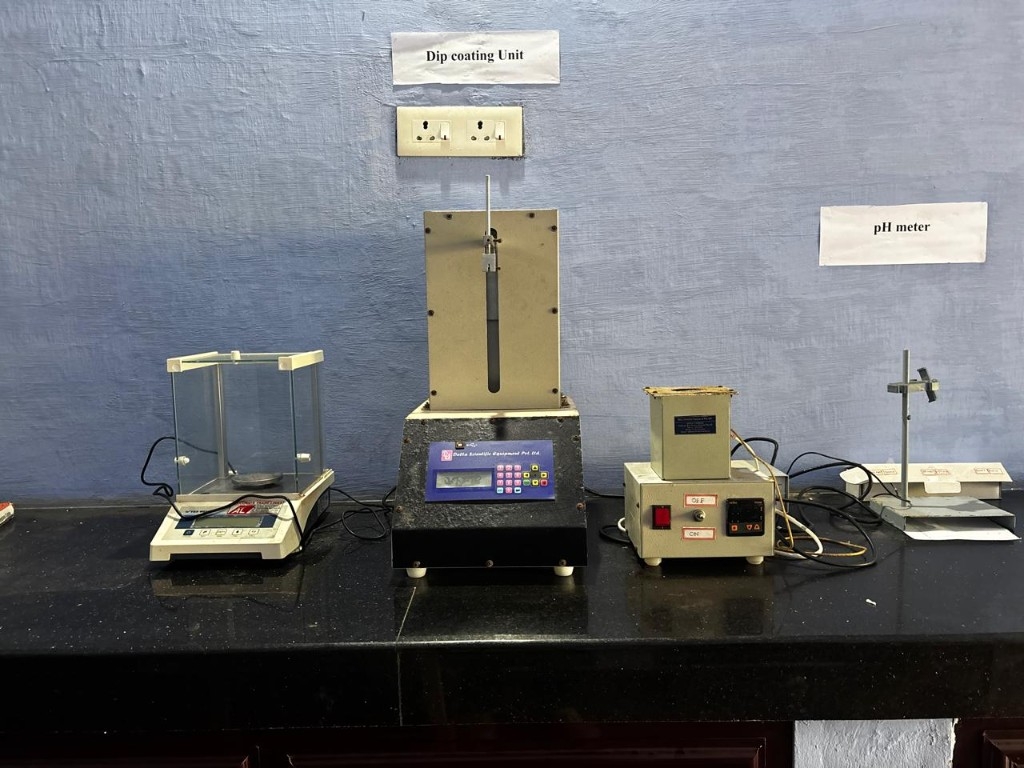
Our laboratory infrastructure provides comprehensive access to material engineering and physics instrumentation through specialized nanoparticle synthesis facilities alongside well-established undergraduate and postgraduate environments configured for both foundational experiments and advanced specializations.
High power telescope dedicated to practical space observations, astronomy projects, and open sky-watching sessions.
Associate Professor & Head of the Department
View profile

Assistant Professor
View profile

Assistant Professor
View profile

Assistant Professor
View profile

Assistant Professor
View profile

Assistant Professor
View profile

Assistant Professor
View profile
Semester-wise syllabi and course structure documents for the undergraduate and postgraduate Physics programmes affiliated with the University of Kerala.
Msc Physics
PADARTHA (Physics Association for Developing and Reverberating Thoughts and Answers) is an academic initiative of the Department of Physics, St. Xavier's College, Thumba. Initially conceived as a platform for undergraduate and postgraduate students to express their innovative ideas, scientific creativity and skills, PADARTHA provided students with opportunities to present their ideas, demonstrate their talents and engage in meaningful scientific discussions beyond the regular classroom environment.
Over the years, PADARTHA has evolved into a broader academic platform that promotes scientific thinking, research, innovation and interdisciplinary interaction. It now provides opportunities for students, research scholars, academicians and scientists to share knowledge, present research findings and interact with experts from diverse fields.
Through seminars, conferences, research presentations and other academic activities, PADARTHA continues to encourage curiosity, creativity, critical thinking and a research-oriented approach among students and the wider academic community.
Primary faculty research focus area spanning nanoparticle synthesis, processing, and applied materials studies.
Research and teaching aligned with atmospheric processes, environmental physics, and observational studies.
Observational astronomy, space science pathways, and astronomy club activities supported by a high-power telescope.
Graduates from our department gain a gateway into multiple professional tracks, which include acting as technical officers in scientific laboratories (like ISRO or VSSC, given our proximity to the Thumba Space Station), acquiring academic positions in schools/colleges, entering corporate analytics as data analysts, or pursuing defense sector jobs and public sector undertakings (PSUs). Here are some of the pathways available for the students:
B.Sc. Graduates: Can transition directly into M.Sc. Physics, specialized Medical Physics, Geophysics, or professional B.Ed. programs.
M.Sc. Graduates: Can apply directly for global doctoral (Ph.D.) fellowships or junior research positions across top-tier scientific institutions.
Technical Officers in research laboratories.
Project Fellows and Scientific Assistants in space research centers (such as ISRO or VSSC).
Data Analysts and quantitative specialists.
Systems and instrumentation technicians.
Academic positions and teaching roles in secondary and higher secondary schools.
Faculty positions and researchers in higher education institutions and university colleges.
Technical executives in Public Sector Undertakings (PSUs).
Technical cadre officers in defense sector jobs.


Apply now to join the Department of Physics at St. Xavier's College, Thumba.